
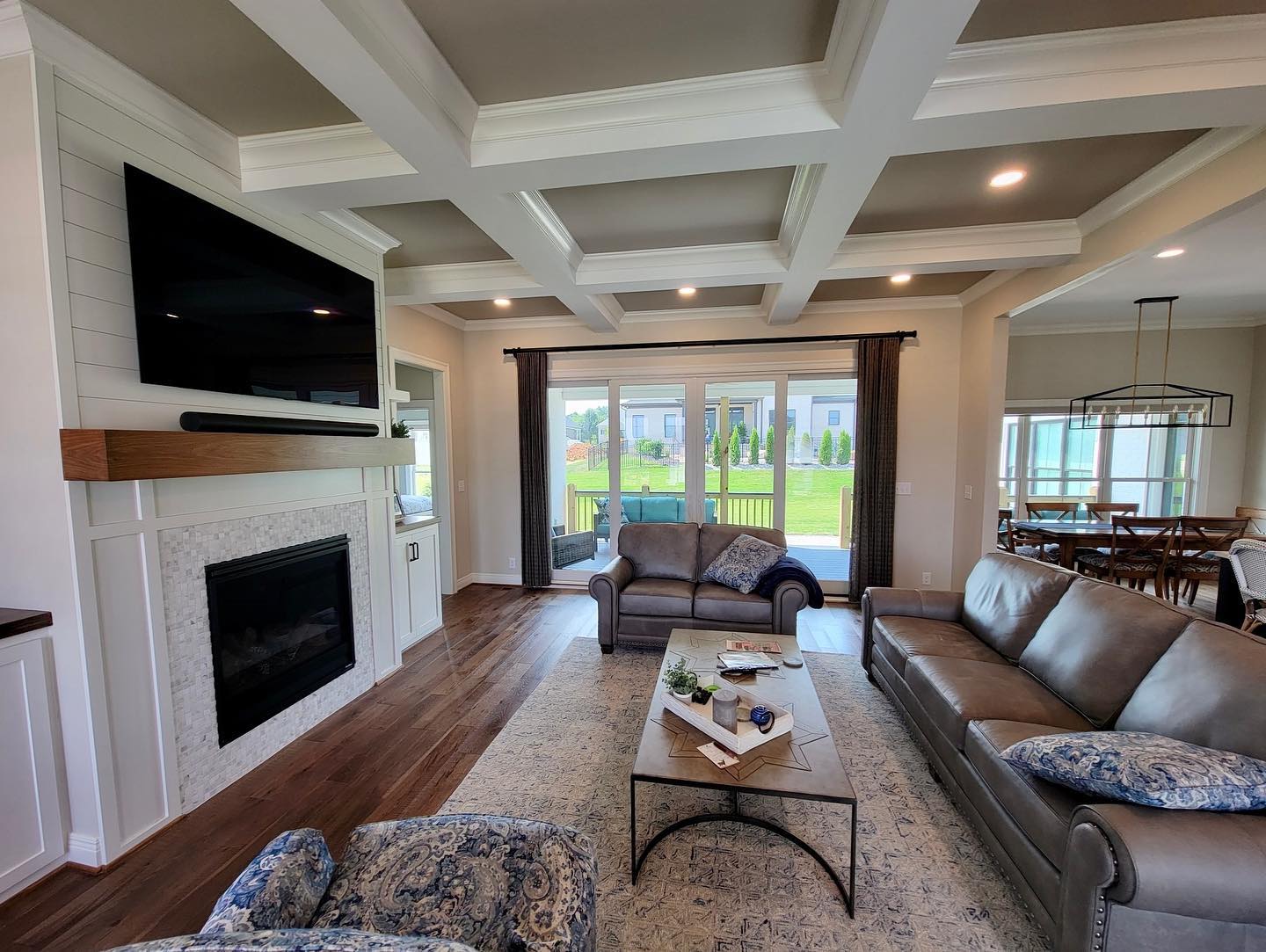
An open floor plan creates a bright and expansive home design. However, finding the right window treatments for open concept spaces can be tricky. You do not need to use the same blind on every window to maintain a cohesive look. The secret is to coordinate style and texture rather than matching everything perfectly. This approach gives you the best window treatments for light control and privacy throughout your space.
The Challenge of Open Spaces
You love your open concept home in Jeffersonville. The natural light flows freely from the kitchen to the living space. It makes your house feel large and welcoming.
But then you try to decorate it.
You stand in the kitchen and see the dining room, the living area, and maybe even a loft. That is a lot of windows to cover at once. You worry that using one type of blind will look boring. But you also worry that mixing styles will look messy.
Choosing the right window treatments is a common problem for homeowners in Southern Indiana. You want privacy and light control. You also want a look that feels finished and intentional.
Coordinate, Don’t Clone
Many people think they must buy the exact same wood blind for every single window throughout their home. This is the “clone” approach. It is safe, but it can feel heavy and uninspired.
We suggest a “coordinate” approach to find the perfect solution.
Treat your open floor plan like a family. The window treatments should share some DNA. This might be the color, the material, or the hardware finish.
For example, you might choose:
- Plantation shutters for the front-facing living room windows.
- Faux wood blinds in the same white tone for the kitchen window.
- Sliding panels or vertical solutions for the sliding glass doors.
The white tone connects them. The function fits the specific window. This ensures your window treatments complement each other without looking identical.
Zoning Your Home
In a split-level or open concept home, you have different “zones.” Each zone has a job. Your window treatments should help do that job while keeping an open feel.
The Kitchen Zone
This area deals with heat, steam, and food splatter. You need durability here. Moisture-resistant roller shades or faux wood blinds work best. They have clean lines and wipe down easily.
The Living Zone
This is where you relax. You might want softer textures here. Drapery adds warmth and absorbs sound. This is helpful in large rooms with echoey hardwood floors. You can layer curtains over blinds to soften the look. Woven wood shades are another great option to add texture to a seating area.
The Hard-to-Reach Zone
Split-level homes often have tall windows in entryways or vaulted ceilings. These are great for light but terrible for privacy. Motorization is the best answer here. You can adjust your motorized shades with a remote or phone without climbing a ladder.
The “Street View” Rule
Your home has two views. There is the view from your sofa and the view from the curb.
Inside, you can mix fabrics and textures. Outside, you want uniformity.
If one window has blue drapes and the next has brown wood blinds, your house looks patchy from the street.
We recommend choosing products with a consistent street-side backing.
- Cellular shades (also called honeycomb shades) often have a white backing regardless of the interior color.
- Custom drapery should be lined with white or off-white fabric.
- Plantation shutters look crisp and uniform from the outside.
This trick allows you to have a pink room and a blue room side-by-side without ruining your curb appeal. It is a simple way to maintain a classic look.
Expert Insights: Handling Light and Glare
We have been covering windows in Jeffersonville and Louisville since 1993. One issue we see often in open layouts is uneven lighting.
In an open concept, one wall might face the harsh afternoon sun. The opposite wall might be in deep shade. If you use the exact same sheer shade on both, one side will be blindingly bright while the other is dark.
You need to balance the light.
Consider using the same fabric but in different opacities. Many custom shade manufacturers offer a “light filtering” version and a “room darkening” version of the same fabric.
Use the room darkening shade on the sunny West-facing wall to cut glare. Use the light-filtering shade on the darker North-facing wall. They will look the same to the eye, but they will handle the light differently. This ensures comfortable light and privacy throughout your space.
Quick Answers
Do window treatments in an open concept need to match?
No. You should coordinate them, but they do not need to be identical. You might use plantation shutters in the living area and roller shades in the kitchen. Keep a similar color palette to tie the open space together.
How do I handle windows at different heights in a split-level home?
Focus on the top line of the window covering. Mount drapery rods or shade headers at the same height where possible. This design element makes the ceiling feel taller and creates a clean look.
What is the best way to make different blinds look good from the street?
Choose window treatments that have a neutral backing. Many cellular shades and custom drapes have a white street-side view. This gives your house consistent curb appeal even if the inside styles vary.
Creating a Cohesive Look
Your open concept home should feel harmonious. You do not have to sacrifice function for style. By coordinating colors and choosing the right window treatments for each zone, you get the best of both worlds. The right window coverings can make all the difference in your interior design.
Start Your Custom Design
Do not let your open floor plan overwhelm you. Let us help you map out a cohesive look for your whole house.
Stop by our Jeffersonville showroom or schedule a free in-home consultation. We will bring the samples to you so you can see how they flow in your actual space.
Schedule Your Free Consultation Here
Key Takeaways
- Don’t Match Everything: Match or coordinate colors instead of using the exact same product everywhere.
- Check Curb Appeal: Ensure all window treatments look white or neutral from the street side.
- Zone by Function: Use durable blinds in kitchens and softer drapes in living areas.
- Watch the Sun: Use different fabric opacities to balance bright and dark sides of the room.
- Use Motorization: High windows in split-level entries are easier to manage with motors.
- Create Flow: Use consistent hardware finishes to tie adjoining rooms together.
- Add Texture: Woven wood shades or Roman shades add depth to a modern design.
