
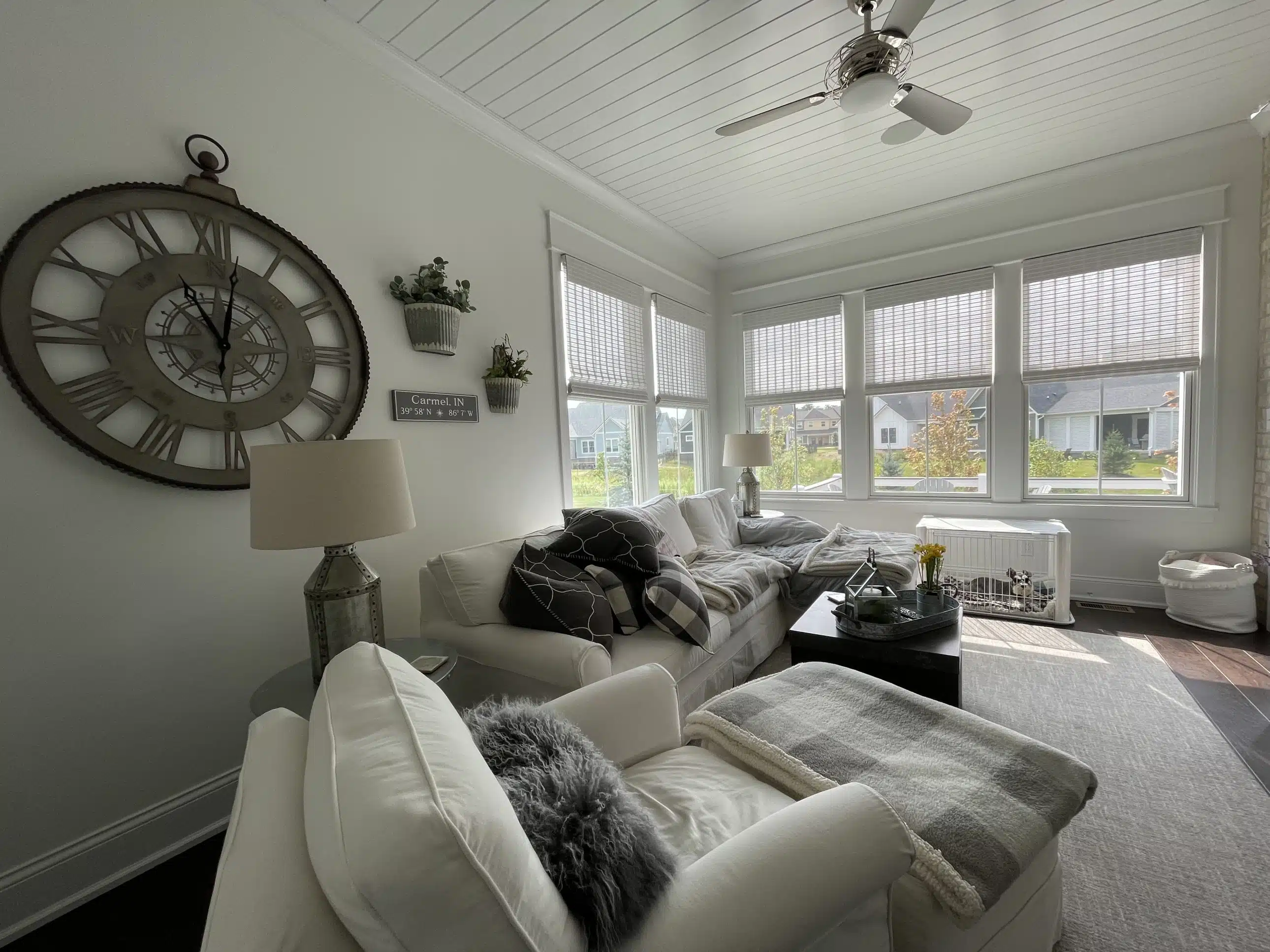
You walk into your living room on a warm Louisville afternoon, turn on the ceiling fan, and hear that familiar sound: your blinds rattling against the window frame. Or worse, you notice your energy bills creeping up because your beautiful new drapes are blocking the air vent you forgot was there. These frustrations are more common than you think, and they’re completely avoidable when you choose the right window treatments.
At WindowDecor, we’ve spent over 30 years helping Louisville homeowners select window coverings that enhance comfort rather than compromise it. The key is understanding how airflow, ceiling fans, and HVAC vents interact with different types of blinds, shades, and shutters. When you get this right, your home stays comfortable, your energy bills stay reasonable, and those annoying rattles disappear.
Why Airflow Matters for Window Treatments
The physical problem is straightforward: ceiling fans create air circulation that affects lightweight or loosely mounted window coverings. HVAC vents push heated or cooled air into rooms, and when window treatments block these vents, your system works harder and your comfort suffers.
The frustration goes deeper. You invested in window treatments to improve your home, not to create new problems. Every time you hear those blinds rattle or feel uneven temperatures in a room, you’re reminded of a choice that didn’t work out as planned.
Here’s the truth: your home should support your comfort, not fight against it. Louisville’s climate brings humid summers and cold winters, which means your HVAC system and ceiling fans play critical roles in maintaining comfortable indoor temperatures year-round. Your window treatments need to work alongside these systems, not against them.
Window Treatments That Work With Ceiling Fans
Cellular Shades (Honeycomb Shades)
These lightweight shades stay firmly in place even with ceiling fans running at full speed. Their honeycomb structure provides excellent insulation, helping regulate temperature while remaining stable. The cellular design traps air, which adds to energy efficiency without creating the flutter problems you get with traditional blinds.
Solid construction makes plantation shutters the quietest option near ceiling fans. The rigid louvers won’t rattle, and you maintain full control over light and airflow by adjusting the slats. Many Louisville homeowners with ceiling fans choose shutters specifically because they eliminate noise while providing superior durability.
Roman Shades
When properly weighted and mounted, Roman shades resist air movement from ceiling fans. Choose heavier fabrics and ensure professional installation with secure mounting brackets. The key is selecting the right fabric weight for your specific room and fan placement.
Roller Shades
Roller shades mount close to the window and stay compact when raised or lowered. Their streamlined design means less surface area for fan-generated air to affect. Cordless or motorized options eliminate dangling cords that could sway in the breeze.
What to Avoid
Long, flowing drapery panels near ceiling fans create constant movement and potential noise. Lightweight aluminum mini blinds tend to rattle and clank. Vertical blinds positioned too close to fan blades risk damage and create annoying sounds.
Clearance Considerations
Measure the distance between your window and ceiling fan blades. Treatments should mount far enough from the fan to avoid any contact. Inside-mount options often work better than outside-mount when ceiling fans are close to windows.
Choosing Window Coverings Near Air Vents
Air vents require different considerations than ceiling fans. Blocked vents force your HVAC system to work harder, waste energy, and create hot or cold spots in rooms.
Top-Down/Bottom-Up Shades
These versatile shades let you adjust coverage from either direction. If you have a floor vent, lower the shade from the top. For ceiling vents, raise the shade from the bottom. You maintain privacy and light control without blocking airflow.
Shutters With Adjustable Louvers
Plantation shutters near vents give you precise control. Open the louvers to allow full airflow when your HVAC runs, then adjust them for privacy or light control as needed. The solid panels won’t blow around when air pushes through the vents.
Proper Clearance Measurements
Floor vents need at least 3-4 inches of clearance from the bottom of your window treatment. Ceiling and wall vents require treatments mounted far enough away to avoid blocking airflow patterns. Professional measurement ensures you get these clearances right the first time.
Energy Efficiency Impact
Blocked vents create pressure imbalances in your HVAC system, forcing it to run longer cycles. In Louisville’s climate, where you rely on both heating and cooling throughout the year, this inefficiency adds up quickly on utility bills. Properly positioned window treatments actually enhance energy efficiency rather than hindering it.
Installation and Sizing Tips for Maximum Comfort
Professional measurement makes the difference between window treatments that work beautifully and those that create problems. Custom sizing accounts for your specific window dimensions, vent locations, and ceiling fan placement.
Older Louisville homes often have non-standard window sizes and unique architectural features. Off-the-shelf treatments rarely fit correctly, leading to gaps that compromise both function and appearance. Custom manufacturing ensures every measurement accounts for your home’s specific needs.
Mounting hardware matters more than most homeowners realize. Secure brackets prevent sagging and movement. Proper installation depth ensures treatments clear windowsills and don’t interfere with window operation.
Cordless and motorized options eliminate dangling cords that sway in airflow from fans and vents. These choices also improve child safety while providing cleaner aesthetics and better functionality.
WindowDecor’s Approach to Airflow-Friendly Window Treatments
For over three decades, we’ve helped Louisville homeowners solve these exact challenges. Our team understands how local home styles, from historic properties to modern builds, require different approaches to window treatment selection and installation.
We manufacture many of our products right here, which means custom sizing for any window configuration. During your free consultation, we measure carefully, discuss your specific airflow concerns, and recommend solutions that address both function and style.
Our professional installation ensures proper clearances, secure mounting, and optimal performance. We account for ceiling fan locations, vent placements, and seasonal airflow patterns that affect comfort in your home.
Get Window Treatments That Enhance Your Comfort
Choosing window treatments shouldn’t mean sacrificing comfort or creating new problems. When you select products designed to work with your ceiling fans and HVAC system, you get the best of everything: beautiful windows, comfortable rooms, and efficient climate control.
Questions about which window treatments will work best with your ceiling fans and air vents? Call us at (502) 713-3535 to schedule your free consultation. We’ll visit your home, assess your specific situation, and recommend solutions that solve your airflow challenges while enhancing your space.