
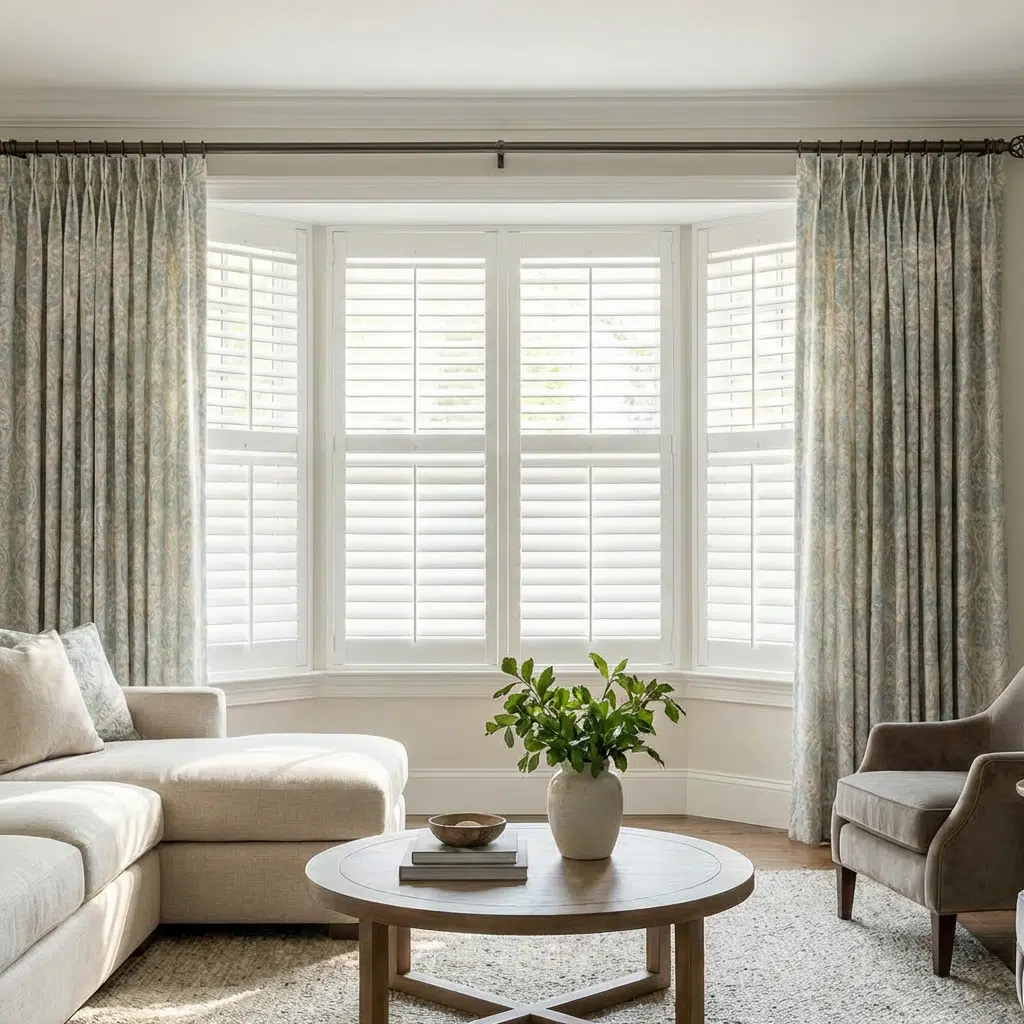
You’ve seen those beautifully styled windows in Louisville homes where blinds and curtains work together perfectly. The window treatments create a layered look that combines function with style. You want that same designer window layering in your home, but pairing curtains and blinds feels overwhelming.
Combining curtains and blinds gives you the best of both worlds. Blinds provide light control and privacy. Curtains add softness, color, and texture. When you layer window treatments correctly, you create depth and visual interest that single window treatments cannot achieve alone.
The challenge? Mixing blinds and curtains requires understanding proportions, color coordination, and functional layering. Get it wrong and your windows look cluttered. Get it right and you achieve a stylish, polished appearance.
Understanding Hard and Soft Window Treatments
Hard window treatments include roller blinds, venetian blinds, wooden blinds, faux wood blinds, roman blinds, vertical blinds, mini blinds, aluminum mini blinds, honeycomb blinds, pleated blinds, and timber blinds. These window blinds offer light control and privacy as their primary function.
Soft window treatments include curtains, drapery, sheer curtains, and heavier curtains. Curtains add visual warmth and complete your home decor. Sheer curtains add filtered light while maintaining privacy.
Blinds offer excellent functionality. Curtains add aesthetic appeal. Combining blinds and curtains creates treatments in the same room that work best together for both form and function.
Start with the Right Blind for Your Foundation
Choose the type of blind first. Your blind choice determines how you layer shades and drapery on top.
Roller blinds work well beneath curtains in modern spaces. Roller shades provide clean lines that don’t compete with decorative curtains. Roman blinds with pelmets create a traditional foundation. Venetian blinds provide adjustable light control behind the curtains.
Wooden blinds pair beautifully with natural fabric curtains. Faux wood blinds or timber blinds offer moisture resistance for kitchens and bathrooms while still allowing you to hang curtains for style.
Blinds or shades paired with blackout blinds give you maximum light blocking. This combination makes the room dark for better sleep when you need it.
Designer Principles for Pairing Curtains and Blinds
Match the Curtain and Blind Colour Strategically
Mixing colors requires intentional choices. You have several approaches when pairing blinds and curtains:
Match neutral window blinds with colorful curtains to let the curtains become the focal point. White roller blinds with patterned curtains create visual interest without overwhelming the window.
Coordinate the blind colour with the rod. This creates visual continuity. Choose curtains in complementary tones that tie your window treatment to your room’s overall palette.
Pick the same curtains across the house if you want cohesive home décor throughout your space. Or use different window treatments in each room to match that room’s specific style and function.
Get Your Proportions Right for a Layered Look
Install your curtain rod 4 to 6 inches above the window frame. This makes windows appear larger and creates proper proportions when combining curtains and blinds.
Curtains should extend 3 to 6 inches beyond each side of the window. This allows curtains to stack off the glass when open, revealing your blinds underneath.
Hang curtains so they just kiss the floor or puddle slightly. Avoid the awkward gap where curtains hang too short. Proper length makes the room feel polished and complete.
Match visual weight when mixing curtains and blinds. Heavy timber blinds or wooden blinds pair well with heavier curtains. Lightweight roller shades work better with lighter curtains.
Understand Functional Layering for Light Control
Blinds provide your primary light control. Venetian blinds provide adjustable slats for precise light management. Roller blinds offer complete coverage. Roman blinds create soft folds while blocking light.
Curtains allow you to soften the look and add another layer of light filtering. Sheer curtains add daytime privacy while letting light through. Heavier curtains block additional light when closed.
For bedrooms, use curtains with blinds to achieve total darkness. Blinds or faux wood blinds paired with blackout curtains make the room dark enough for quality sleep.
Mix Patterns and Textures for Sophisticated Home Décor
Solid blinds give you freedom to use patterned curtains. If you choose patterned roman blinds, keep curtains solid to avoid visual competition.
Combine different textures. Smooth roller blinds contrast beautifully with textured linen curtains. Woven wooden blinds pair well with silk drapery. Venetian blinds provide a sleek backdrop for flowing curtains.
The Do’s and Don’ts of Pairing Blinds and Curtains
Do’s and Don’ts for Proportions
Do install curtain rods high and wide to make windows feel larger. Do choose curtains that reach the floor for a finished appearance. Do ensure your curtain rod can support the weight of your chosen curtains.
Don’t hang curtain rods too low. Don’t choose curtains that are too short. Don’t use flimsy hardware for heavy curtains.
Do’s and Don’ts of Pairing Colors
Do test samples together before committing. Do consider your room’s existing color palette. Do match undertones when pairing curtains and blinds.
Don’t mix warm and cool tones randomly. Don’t forget that window blinds and curtains should complement your walls and furniture.
Advantages of Combining Curtains and Blinds
The combination of curtains and blinds gives you flexible light control throughout the day. Blinds offer precise adjustment. Curtains add softness and style.
The right combination of curtains and blinds improves energy efficiency. Blinds provide insulation at the window. Curtains add another insulating layer.
Blinds with curtains create visual depth that using different window treatments alone cannot achieve. The layering window approach adds dimension and sophistication.
Avoid These Common Mistakes When Mixing Window Treatments
Window Overcrowding
Don’t combine curtains and blinds with valances and sheers all at once. Limit yourself to two layers in most rooms. Too many treatments make windows feel heavy and cluttered.
Mismatched Styles
Casual bamboo roller blinds don’t pair well with formal silk drapery. Modern aluminum mini blinds clash with traditional swag curtains. Match formality levels when combining blinds and curtains.
Wrong Installation Order
Install your blinds or shades first. Then installing curtains becomes easier because you know exactly how much space you have to work with.
Room-Specific Strategies for Blinds and Curtains Together
Living Rooms
Layer sheer curtains over roller shades for daytime privacy with natural light. Add heavier curtains for evening privacy and light blocking. This combination lets you leave the curtains open during the day while the roller blinds handle light control.
Bedrooms
Combine curtains with blinds that offer room-darkening capability. Use blinds or faux wood blinds paired with blackout curtains to make the room dark for better sleep. The combination of blinds and curtains gives you maximum light blocking.
Kitchens
Keep it simple. Use roller blinds or venetian blinds with a simple valance. Avoid long curtains near cooking areas. Short curtains or blinds alone work better in kitchens.
Key Takeaways for Mixing Blinds and Curtains
Mixing blinds and curtains like a designer requires choosing the right type of blind first, coordinating colors thoughtfully, getting proportions correct, and understanding how blinds and curtains work best together functionally.
Start with blinds that meet your light control needs. Add curtains that complement your blind style and enhance your room’s aesthetic. Follow the do’s and don’ts of pairing to avoid common mistakes.
The advantages of combining curtains and blinds include better light control, improved energy efficiency, and a more polished, layered look that single window treatments cannot achieve.
Get Expert Help Combining Blinds and Curtains
Choosing blinds with curtains that work perfectly together takes experience. WindowDecor has helped Louisville homeowners create beautiful layered window treatments for over 30 years.
Our design team evaluates your windows, discusses your needs for light control and privacy, and shows you how different window treatments can work together in your space. We handle everything from measurement through professional installation.
Call (502) 713-3535 to schedule your free design consultation. Let’s create the layered window treatment combination you’ve been wanting.