
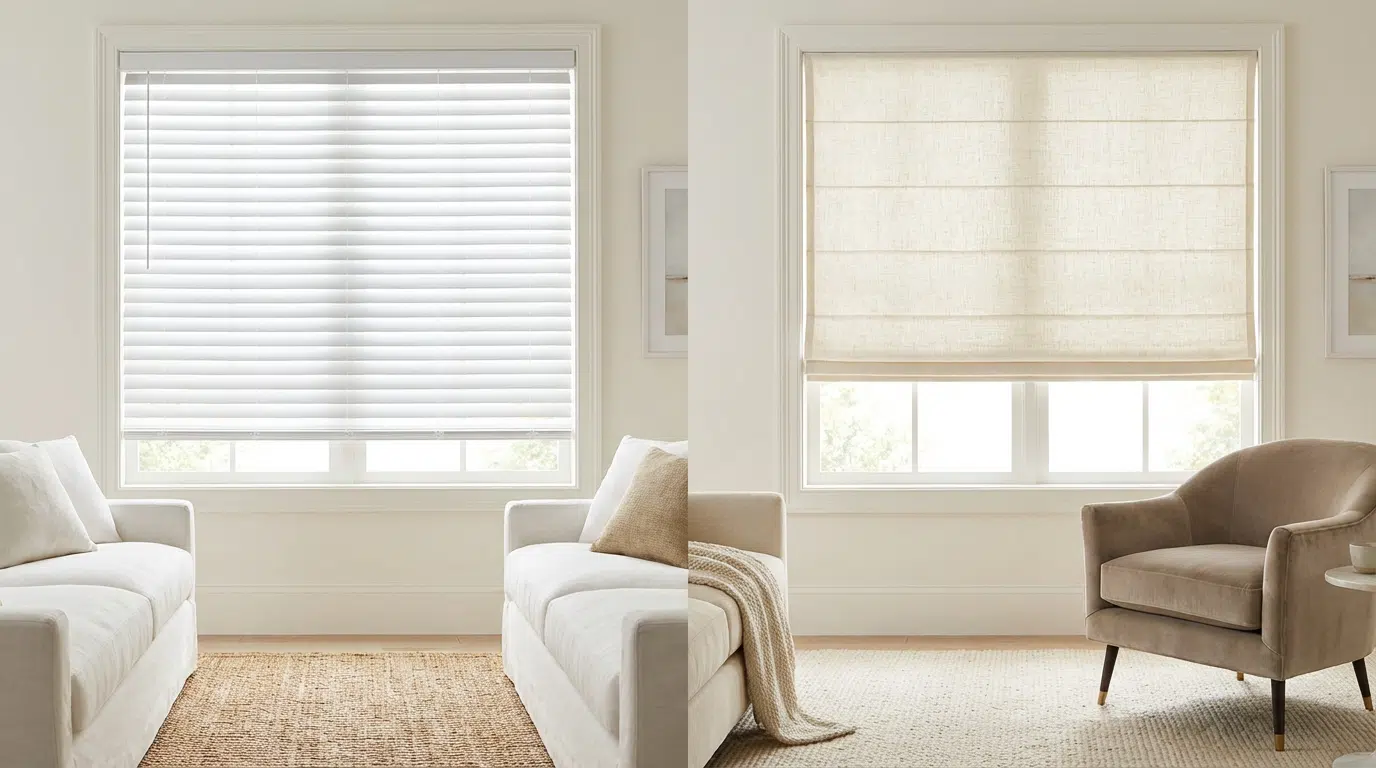
You stand in the big-box store aisle, looking at rows of window blinds and shades with price tags that seem too good to pass up. A full set of window treatments for your Jeffersonville home could cost less than a nice dinner out. The question running through your mind: what’s the catch with these inexpensive blinds?
The truth is, budget blinds and shades have their place. But they also come with hidden costs that many homeowners discover only after installation. This comprehensive guide will help you understand the pros and cons of cheap window coverings and when they make sense for your home.
Understanding the Pros and Cons of Budget Window Treatments
When it comes to window treatments, the initial cost often drives purchasing decisions. Inexpensive blinds look appealing at checkout, but let’s examine what you’re getting.
What Budget Blinds Offer
Cheap blinds come in various styles. Mini blinds are one of the most popular choices for budget-conscious homeowners. These versatile window treatments feature horizontal slats that can be adjusted to control light and privacy. Vertical blinds are another option, making them ideal for sliding glass doors and large window sizes.
Budget roller shades consist of a single piece of fabric that rolls up and down, offering a modern look at a low price point. These shades typically come in basic colors and materials, providing simple light control for any window frame.
The Real Cost Issues
Budget window treatments look appealing initially, but here’s what happens next for many homeowners in Jeffersonville.
Frequent Replacement Adds Up
Inexpensive blinds typically last 1-3 years before showing serious wear. The plastic material warps in direct sunlight. Mini blinds may lose their ability to stay level. The slats of blinds bend and break. The lifting mechanisms jam or fail completely.
Do the math: buying cheap blinds every two years for ten years costs more than quality window coverings purchased once. New blinds require repeated measuring, installation, and disposal of old window treatments.
Performance Problems
Low-cost window treatments often fail at their basic job. They don’t offer great light control, leaving rooms bright when you need darkness. They provide minimal insulation, so your energy bills stay high during Jeffersonville’s humid summers and cold winters. The slats don’t trap air effectively, reducing energy efficiency.
Cheap roller shades may not block light completely. Budget vertical blinds twist and tangle. The mechanisms that allow light adjustment break down quickly, leaving you with window coverings that won’t stay in position.
Safety Concerns
Cheap blinds with corded systems pose risks for young children and pets. While newer products must meet safety standards, budget options often use older designs or flimsy cordless mechanisms that break easily.
The Hidden Time Investment
Every replacement cycle means measuring windows again, shopping for new blinds, installing fresh window treatments, and disposing of old ones. After three or four cycles, you’ve spent significant time on a task that quality blinds could have solved once.
Types of Blinds and Shades: Understanding Your Options
Before deciding on budget versus quality, let’s explore the types of window treatments available and what blinds and shades offer at different price points.
Popular Blind Options
Mini Blinds: These blinds are typically made from aluminum or vinyl with narrow horizontal slats. Mini blinds are easy to clean with a damp cloth and come in various colors. They’re the cheapest window treatments available but may lack durability.
Venetian Blinds: Similar to mini blinds but with wider slats, venetian blinds offer better light control. The slats can be adjusted to control the amount of light entering your space.
Vertical Blinds: These blinds are perfect for sliding glass doors and wide windows. Vertical blinds feature slats that hang vertically and slide along a track at the top of the window.
Wood Blinds: Real wood blinds offer a classic appearance but blinds are more expensive than plastic alternatives. Wood blinds provide excellent insulation and light control.
Faux Wood Blinds: These blinds offer the look of real wood at a lower cost. Faux wood resists moisture better than real wood, making them ideal for humid environments.
Common Shade Varieties
Roller Shades: These shades consist of fabric that rolls around a tube at the top of the window. Roller shades offer a sleek, modern look and easy operation. Solar shades are a type of roller shade that blocks UV rays while allowing light.
Cellular Shades: Also called honeycomb shades, cellular shades feature a unique design that creates air pockets. These pockets trap air, providing superior insulation and energy efficiency. Cellular shades offer excellent light control and come in various materials and opacity levels.
Roman Shades: These shades fold into pleats when raised, creating an elegant appearance. Roman shades typically come in fabric options ranging from sheer to blackout.
Cellular Blinds: A hybrid option, cellular blinds combine the insulating properties of cellular shades with adjustable features.
When Budget Blinds Make Perfect Sense
Here’s the honest truth about when cheap window coverings are the best choice for your situation.
Temporary Living Situations
If you’re renting short-term or staging a home for sale, inexpensive blinds serve their purpose. You need basic coverage for a few months, not a long-term investment. Budget mini blinds or simple roller shades provide privacy and a finished look without overinvesting.
Rental Properties
Landlords face different calculations. When tenants move frequently and window treatments take abuse, budget blinds may be a better financial decision. Basic, easily replaceable window coverings keep costs manageable.
Low-Priority Spaces
That basement storage room or rarely-used guest bedroom? Budget blinds work fine. You’re not looking at these windows daily, and the window treatments don’t need to perform under demanding conditions.
Bridging the Gap
Sometimes you need window coverings now but want to save for quality treatments later. Cheap blinds can serve as a temporary solution while you budget for the upgrade you want.
When Quality Window Treatments Are the Best Window Choice
For most Jeffersonville homeowners in permanent residences, investing in better blinds and shades makes financial sense.
Main Living Areas
Your living room, master bedroom, and kitchen deserve window treatments that look good and function well for years. Quality blinds offer durability and performance that cheap alternatives can’t match.
Sun-Exposed Windows
Jeffersonville homes with south and west-facing windows take a beating from intense afternoon sun. Budget materials warp, fade, and deteriorate quickly. Quality window coverings with UV-resistant properties maintain their appearance and keep them looking fresh for years.
Energy Efficiency Priorities
If you want to reduce heating and cooling costs, you need window treatments that trap air effectively. Cellular shades create honeycomb air pockets that provide superior insulation. Quality wood blinds or faux wood options offer better energy efficiency than cheap plastic material alternatives.
The right blinds offer significant energy savings by controlling light and temperature. Shades offer a cost-effective way to reduce energy bills when you choose quality cellular or honeycomb shades.
Long-Term Homeownership
Planning to stay in your home for five years or more? Quality window treatments are the best choice. You’ll avoid replacement cycles and benefit from warranties. Blinds are one investment that pays dividends through performance and longevity.
Child and Pet Safety
Families with young children or pets should prioritize cordless options or motorized treatments. You can motorize most quality blinds and shades for safer, more convenient operation. Quality products offer reliable mechanisms that won’t break down and create hazards.
Light and Privacy Control
Quality window treatments offer superior light control compared to budget options. The slats of blinds in premium products can be adjusted to control exactly how much light enters while maintaining privacy. Shades may offer blackout options that completely block light when needed.
Choosing the Right Window Coverings for Your Home
When it comes to window treatments, the best window choice depends on your specific situation. Here’s how to discover the best option for each space.
Consider Your Needs
Different rooms require different window treatment approaches. Bedrooms need excellent light control for sleep. Bathrooms benefit from moisture-resistant faux wood or vinyl options. Living areas deserve window coverings that enhance your home’s appearance while providing functionality.
Match Treatments to Window Types
Large sliding glass doors work best with vertical blinds or panel track shades. Standard windows have more flexibility. Small windows might work fine with budget mini blinds, while prominent windows deserve quality treatments that keep your home looking its best.
Think About Materials
Window treatments like wood or fabric offer warmth and elegance but require more maintenance. Blinds are typically made from aluminum, vinyl, wood, or faux wood. Shades can be more expensive when made from premium fabrics but offer unique benefits.
Woven wood shades provide natural texture. Cellular shades excel at insulation. Roman shades add softness. The choice for your home depends on your priorities for appearance, function, and maintenance.
Evaluate Long-Term Value
Cheap window coverings might save money initially, but quality window treatments offer better value over time. They’re easy to clean, maintain their appearance, and keep them looking good for years. Many homeowners find that investing in quality blinds or shades once beats buying cheap replacements repeatedly.
What Jeffersonville Homeowners Should Know
Our area presents specific challenges for window treatments. The Ohio River valley’s humidity can warp cheap wood blinds and promote issues with fabric shades. Summer heat intensifies UV damage. Winter temperature swings stress mounting hardware and window frame attachments.
Quality window coverings designed for our climate perform better and last longer. They’re engineered to handle moisture, temperature fluctuations, and the wear patterns common in Midwest homes.
You have options between cheap and premium. Mid-range blinds and shades offer significant quality improvements over budget options without top-tier prices. Discovering the best window treatments for your budget means finding the sweet spot between cost and performance.
Making Your Decision
Budget blinds aren’t inherently bad. They serve a purpose in the right situations. Problems arise when homeowners use them where they’ll fail quickly or perform poorly.
The goal isn’t to spend the most money. It’s to choose window treatments that match your needs. Sometimes mini blinds are perfect. Other times, cellular shades or quality wood blinds make more sense. Understanding the pros and cons helps you make informed decisions about window coverings for your home.
Get Expert Help Choosing the Best Choice
Still unsure which window treatments are ideal for your Jeffersonville home? WindowDecor offers free consultations where we’ll assess your specific windows, discuss your priorities and budget, and recommend solutions that fit.
We’ve helped local homeowners discover the best window coverings for over 30 years. Whether that means budget-friendly options for some windows and quality investments for others, we’ll give you honest advice about blinds vs shades and which types of window treatments work best for your situation.
Call us at (502) 713-3535 to schedule your free consultation. Let’s find the perfect window treatments to keep your home comfortable, beautiful, and energy-efficient.