
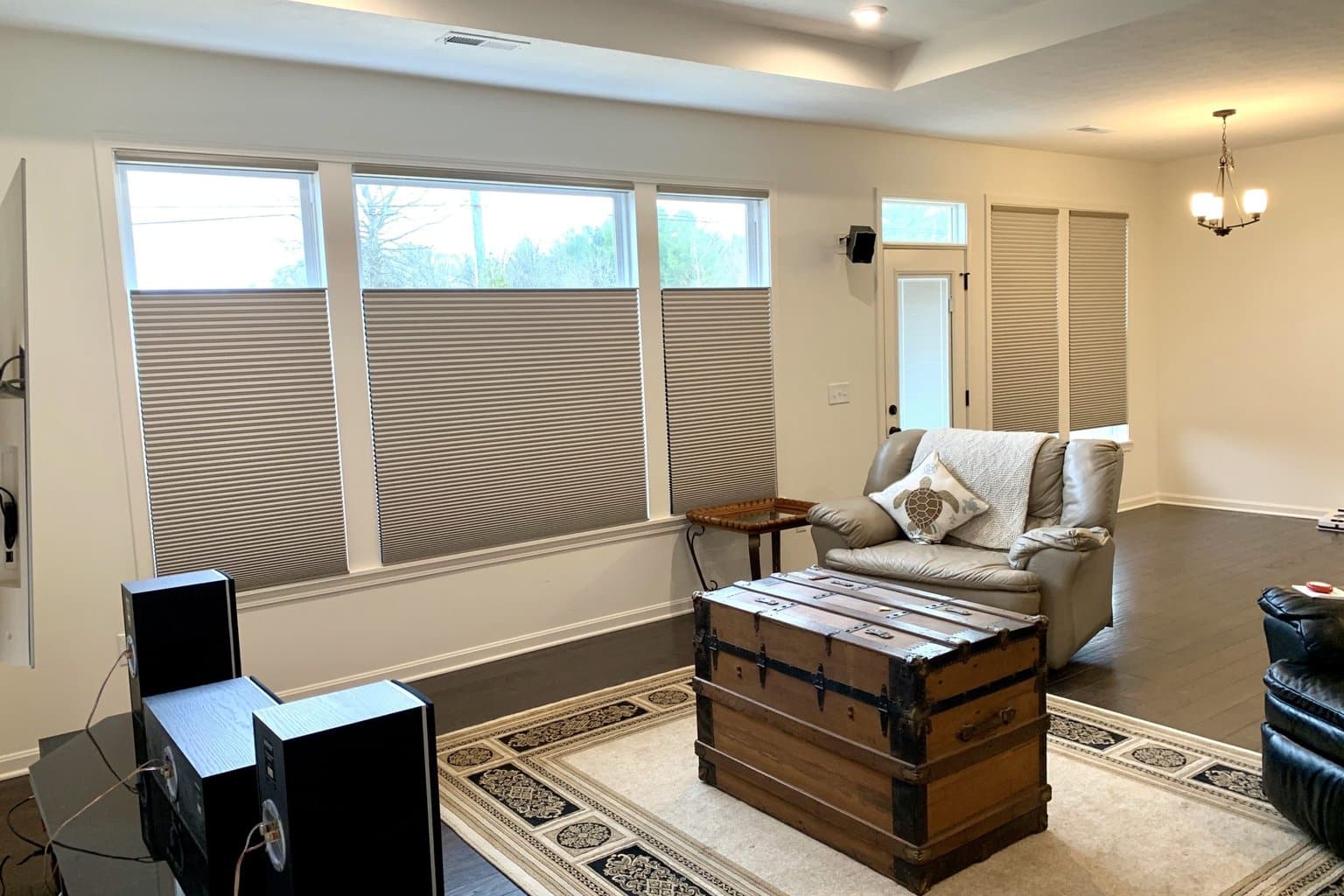
Cellular shades insulate better and soften incoming light. Roller shades offer a cleaner look, more fabric choices, and flexible light control. Neither style wins in every room, so compare privacy, moisture exposure, window size, and interior design goals before deciding.
Choosing between cellular and roller shades can feel difficult when each room has different needs. You may want privacy in a bedroom, less glare in an office, and easy cleaning in a kitchen. The better fit depends on how you use the space.
What Are Cellular Shades vs Roller Shades?
A cellular shade is a fabric covering with air pockets, while a roller shade is a fabric panel that rolls onto a tube. Cellular shades focus on thermal insulation and softer light. Roller shades focus on fabric texture, a flatter profile, and flexible light control.
Cellular shades are often called honeycomb shades because their folded fabric forms pockets. Those pockets create a dimensional look at the window. Roller styles use one panel of fabric, which creates a more minimal look.
Both shades are designed to manage daylight, privacy, and the room’s appearance. Comparing roller and cellular styles starts with their construction. That construction affects the way each option looks and performs.
How Are Cellular Shades Built?
A cellular shade uses a honeycomb structure that creates air pockets between the room and window glass. Single-cell options have one layer of pockets. Double cell cellular shades have two layers.
This construction gives these shades their shaped profile. It also separates them from a blind, which uses individual slats. Our guide to how honeycomb shades save energy explains this insulating design.
How Are Roller Shades Built?
A roller shade uses one fabric panel that raises and lowers around a tube. The fabric can be light-filtering, room-darkening, blackout, or solar fabric. This style provides a smooth surface with fewer visible folds.
A solar shade is made to reduce glare while keeping some outward visibility. It can fit a home office or living room with strong daylight. Solar roller shades can also suit rooms where you want a clean, simple finish.
Do Cellular Shades Provide Superior Insulation Compared With Roller Shades?
Cellular shades provide superior insulation because their air pockets create a buffer between the room and glass. Roller shades may reduce direct sun, but their single fabric panel does not use the same pocketed structure. Choose cellular shades if insulation is your main priority.
R-value measures resistance to heat flow. A higher R-value means a material resists heat flow more. The shape of these shades may support energy efficiency near windows that feel warm or cold.
Heating and cooling can be affected by the glass, frame, fit, and condition of a window. A covering can support comfort, but it cannot correct a failed seal or damaged frame. Open the shade when condensation persists on interior glass.
When Do Cellular Shades Win on Insulation?
Cellular shades win when softer light and insulating goals matter more than a flat fabric look. They can fit bedrooms and home offices where the window affects comfort. Cellular shades in bedrooms can also support privacy when the selected material fits that need.
Double cell designs add another layer of pockets. Ask about available fabrics, lift styles, and mounting choices before ordering. Cellular shades are available in light-filtering and room-darkening materials.
Do not assume every room needs the same solution. A sun-facing office may need glare control. A bedroom may need stronger privacy and a quieter visual profile.
Do Roller Shades vs Cellular Shades Give Better Light Control and Privacy?
Roller shades vs cellular shades comes down to fabric, mounting, and how much privacy you need. Both can soften or reduce daylight. Roller shades offer more fabric looks, while cellular styles can offer light-filtering and room-darkening materials.
Light-filtering fabric softens daylight while allowing some light through. Room-darkening material reduces more incoming light. Blackout fabric is designed to block light through the fabric itself.
Shades provide different results depending on their fabric and fit. Light can still enter around the edges of an inside-mounted shade. An outside mount can cover more area around the glass.
Are Blackout Cellular Shades or a Blackout Roller Better for Bedrooms?
Blackout cellular shades and a blackout roller can both reduce light in a bedroom. The better choice depends on whether you prefer an insulated structure or a fabric-forward look. Check the edges and mount, because gaps can still allow light inside.
Solar or blackout fabric should match the room’s purpose. A nursery, bedroom, or media room may need reduced daylight. A living room may need light filtering instead.
Can people see through these shades at night? Privacy depends on fabric, color, weave, and lighting conditions. Review actual samples before making a decision.
What Are Top-Down Bottom-Up and Lift Options?
Top-down bottom-up shades can open from the top or bottom. This setup can bring daylight into a room while keeping the lower window covered. It may be useful where privacy and light need to work together.
Cordless lifts remove dangling cords. Motorized lifts let you raise or lower shades with a remote or phone-based control. WindowDecor offers motorized blinds and shades.
How Do Pleated Shades vs Cellular Shades Compare?
Pleated shades use folded fabric without enclosed air pockets, while cellular styles form pockets between fabric layers. The main difference in pleated shades vs cellular shades is the insulating structure. Both can provide soft fabric texture and a folded appearance.
Pleated styles can suit a room where you want a simple folded look. Cellular shades have a softer, deeper profile because of their layered construction. Neither option is automatically right for every decor style.
Cellular vs roller shades is also a useful comparison when you want less bulk. A roller style lies flatter at the window. A pleated or cellular style adds more texture and visual depth.
Should You Choose Roller Shades for Kitchens, Bathrooms, and Wide Windows?
Choose roller shades for rooms where you want a clean fabric surface and a flatter appearance. They may fit kitchens, bathrooms, and one wide window when the selected material suits the space. Cellular styles can also work, but their shaped cells need careful cleaning.
Moisture and splashes can affect fabric and hardware. In a kitchen or bathroom, ask where the shade will sit and how it should be cleaned. Avoid selecting by color alone when room conditions differ.
Roller shades may be easier to wipe or dust because they use a single panel. Cellular shades can collect dust within their pockets. Use the manufacturer’s care instructions for either product.
What Works Best for a Wide Window?
One wide window may need a shade that fits the opening and supports daily use. Roller shades can cover broad spans with a clean, minimalist look. Ask whether one treatment or several sections fit the window better.
Inside mount shades fit within the opening. Outside mount shades install beyond the opening. The mounting choice affects coverage, light gaps, and the finished appearance.
Roller and cellular shades can both work across a home. You may use one in a kitchen and another in a bedroom. The room’s job should guide the final selection.
Should You Add a Smart Home Lift System?
A smart home lift system can make roller and cellular shades easier to adjust when windows are hard to reach. Motorized options can raise or lower coverings with a control system. The right choice depends on access, routine, and product availability.
Motorization can help you manage daylight without stretching or climbing. It may fit a high window or a room with several treatments. Discuss the selected product and control preferences during your consultation.
Choose cellular shades when insulation and a softer folded profile are your highest priorities. Choose roller shades if you want a flat panel and more visible fabric options.
Are Cellular Shades Better Than Roller Shades for Style?
Cellular shades and roller shades can both fit current interior design. Cellular styles create a soft, dimensional finish. Roller styles create a clean, flat surface with a wide range of fabric textures, colors, and patterns.
Cellular shades are not out of style in 2026. Their appearance depends on fabric, color, pleat size, and how they fit the room. Roller shades win when a minimalist look, textile texture, or simple line fits the decor.
Do cellular shades look cheap? Any shade can look out of place when its color, mount, size, or fabric does not suit the window. A custom fit can help the result look intentional.
These styles can also work together in one home. You may choose roller shades for a kitchen and choose cellular shades for bedrooms. Our Roman shades versus roller shades comparison can help you compare another fabric option.
| Feature | Cellular Shade | Roller Shade |
|---|---|---|
| Construction | Folded fabric with air pockets | Single rolled fabric panel |
| Insulation focus | Pocketed structure supports insulation | Fabric helps manage direct sunlight |
| Fabric choices | Available in several light-control materials | Many textures, patterns, and colors |
| Light control | Light-filtering and room-darkening options | Light-filtering, blackout, and solar options |
| Look | Soft, dimensional profile | Clean, flat profile |
| Best decision factor | Insulation and softer light | Style and fabric choice |
What Are the Downsides of Cellular Shades?
Cellular shades can collect dust within their pockets and need careful cleaning. Their structured profile may not match every room’s style. They can also be a different price point than a standard roller shade, depending on fabric, lift system, size, and customization.
Cellular shades are often less suitable when you want a broad fabric pattern or a very flat appearance. They may also need more care in a humid room. A roller style may be less suitable when thermal insulation is your main goal.
When comparing roller options, consider privacy, daylight, cleaning, window size, and the view from both sides. Decide between cellular and roller styles by the room, not by one universal rule.
Are Roller Shades More Affordable Than Cellular Shades?
Roller shades can be more budget-friendly than cellular shades because they use a single fabric panel. They can also be more affordable than cellular shades depending on size, fabric, lift system, mount, and custom details. Price still changes with the selected product.
Do not choose roller shades only because the first option seems less expensive. A lower initial price may not match your privacy, light, or insulation goals. Compare written options that describe fabric, operation, mounting, and installation.
Lifespan depends on the product, daily use, and care. Ask for warranty terms in writing. Follow care guidance instead of using cleaners that may damage fabric or operating parts.
Which Shades If You Want Insulation, Fabric Choice, or a Clean Look?
Choose shades if you want a solution built around the room’s real needs. Cellular shades win for insulation and softer light. Roller shades win for a flatter look, visible fabric texture, and flexible material selection.
Roller blinds vs cellular shades is not a question with one answer for every window. Solar shades vs cellular shades can also depend on whether glare control or insulating structure matters more. Both products can fit different rooms in the same home.
WindowDecor has provided custom window treatments since 1993. We are family-owned and operated, with more than 30 years in business. We offer honeycomb shades, roller shades, motorized options, custom design, professional installation, and warranty work.
Key Takeaways
- Choose cellular shades for insulation and softer filtered light.
- Choose roller shades for a flatter profile and fabric variety.
- Compare light-filtering and blackout fabrics before choosing bedroom shades.
- Check moisture exposure before selecting a kitchen or bathroom covering.
- Review mounting, lift style, and window size during your consultation.
Start by scheduling a free design consultation with WindowDecor. Next, we can compare options for each room and measured window. Your goal is a custom window treatment that fits your light, privacy, and style needs.
We have handled the process from the factory floor to the customer’s door since 1993. We manufacture our own products and provide factory-direct pricing. Explore our custom blinds and shades and other window treatment options for your home.
