
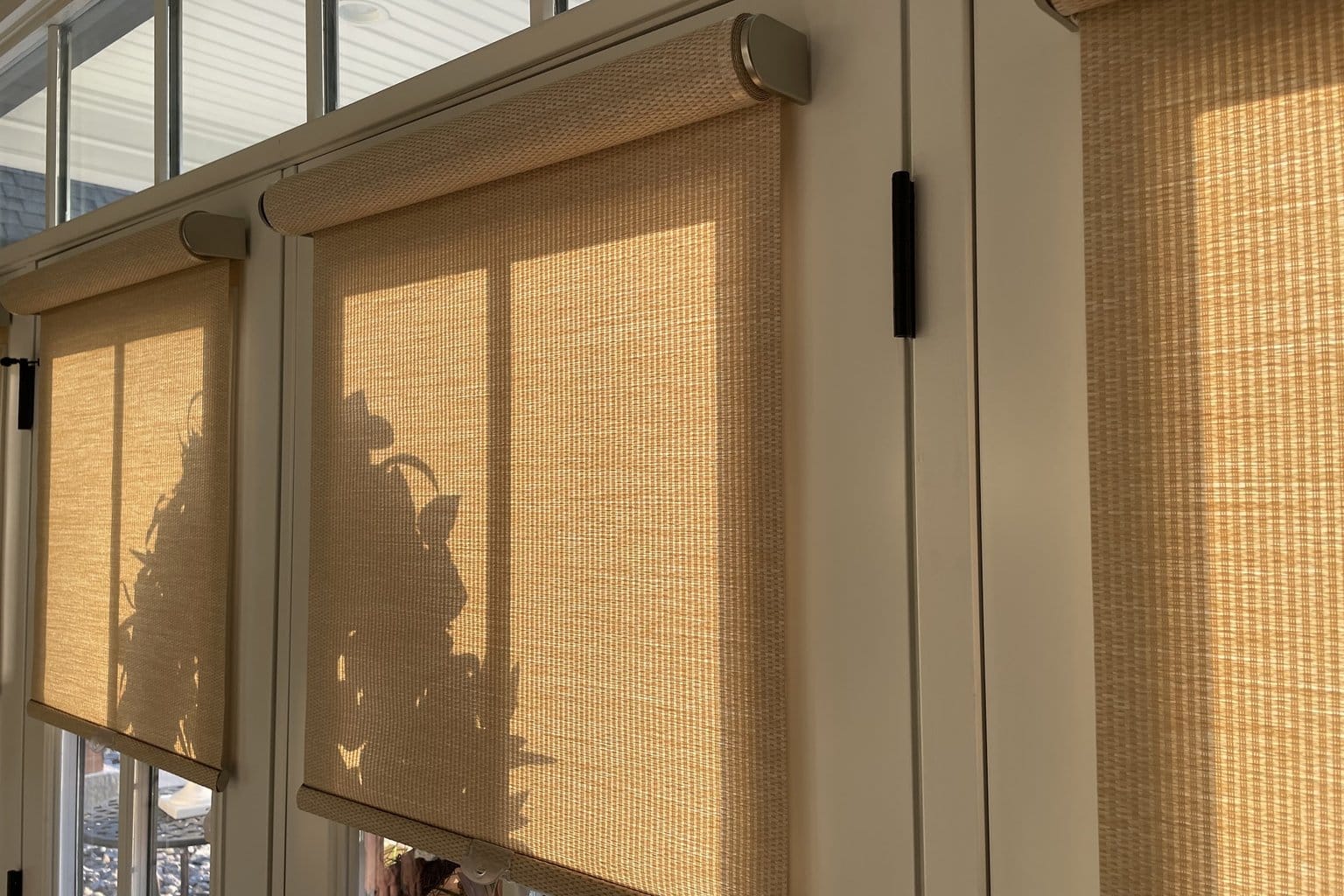
Woven wood shades add natural texture, filtered light, and a warm layered look. Without a liner, they may offer little nighttime privacy and are not suited to wet rooms. A privacy or blackout liner can change the light and privacy trade-offs, so choose based on the room’s needs.
A woven shade can make a room feel warm without making it feel heavy. Yet the same open weave that creates a relaxed look can allow visibility after dark. Before choosing woven wood shades, consider the room, the light, moisture exposure, privacy needs, and care requirements.
What Are Woven Wood Shades Made Of?
A woven wood shade is a window treatment made from natural materials woven into a textured panel. Bamboo, jute, seagrass, reed, and matchstick weaves can create different colors, textures, and amounts of filtered light. Each material can vary from shade to shade.
Natural fibers are materials that come from plants. Their color and texture can vary because they are not manufactured to look identical.
Woven wood shades may use a flat fold, Roman fold, or roll-up style. A Roman fold gathers into horizontal folds when raised. A roll-up shade rolls upward as it opens.
How Does the Weave Change the Look?
A tighter weave can reduce the light that passes through the shade. A more open weave can allow more daylight and more visibility. The weave also changes how much texture you see from across the room.
Natural woven shades can bring visual interest to a simple room. They can also work with traditional, casual, coastal, and layered interiors. Look at a full sample before choosing, since a small swatch may not show the complete pattern.
What Are the Main Benefits of Woven Wood Shades?
Woven wood shades offer natural texture, soft filtered daylight, and a lighter visual feel than solid fabric shades. They can pair well with drapery and work across many decor styles. Their natural materials create a look that standard blinds may not provide.
Light filtering means a material softens sunlight instead of blocking it fully. It can reduce harsh brightness while keeping a room connected to daylight.
Woven wood shades can suit living rooms, dining rooms, and sunrooms. These spaces may benefit from light control without needing full darkness. They can also work on a large window when the selected style fits the opening.
Why Do Homeowners Choose Woven Shades?
Woven shades can add warmth without adding a heavy fabric layer. The texture can make a window feel finished, even when the rest of the room uses simple furnishings. A valance may also conceal the upper hardware.
They can pair with soft treatments such as drapery. For ideas on combining materials, see our guide to mixing hard and soft window treatments.
Can Woven Wood Shades Be Cordless or Motorized?
Cordless woven wood shades remove hanging lift cords. Motorized lifts allow you to raise or lower a shade using a control system. The best lift choice depends on window access, daily use, and your preferences.
WindowDecor offers motorized blinds and shades. Ask about available operating options during a free design consultation.
What Are the Downsides of Woven Wood Shades?
The main downsides of woven wood shades are limited nighttime privacy without a liner, moisture limits, natural color variation, and dust within the weave. They may also cost more than basic roller shades. These trade-offs matter most in bedrooms, bathrooms, and busy family spaces.
An unlined woven wood shade can allow light and visibility through its weave. That may be welcome during the day. It may not provide the privacy you want after interior lights turn on.
Natural materials can also fade or change in appearance from sun exposure. Color variation is part of the material’s character. It can be a drawback if you want every window covering to look exactly alike.
Why Are Wet Rooms a Poor Fit?
Woven wood shades are not a good choice for showers or areas with direct water exposure. Moisture and humidity can affect natural fibers and the shade’s shape. Choose a window treatment made for the conditions in the room.
A bathroom may still use a woven shade when it stays away from water. Review the window location, ventilation, and cleaning needs first. If moisture is a concern, ask about other blind or shade materials.
Is Dust a Concern?
Dust can settle within a textured weave. Regular, gentle care can help preserve the shade’s appearance. Avoid using cleaners that may stain, saturate, or damage natural fibers.
For care ideas across several products, read our guide to cleaning window treatments, blinds, and shades.
Can You See Through Woven Wood Shades at Night?
You may see through unlined woven wood shades at night when interior lights are on. Visibility depends on the weave, the room lighting, and the light outside. A privacy liner or blackout liner can reduce this concern when nighttime privacy matters.
A liner is an added backing behind the woven shade. It changes how the shade handles light, privacy, and the view through the window.
A privacy liner can limit visibility while still allowing some soft daylight. A blackout liner is made to block more light through the shade. Light may still enter around the edges, depending on the shade’s fit and mount.
When Does a Privacy Liner Make Sense?
A privacy liner can make sense in a bedroom, street-facing room, or room used after dark. It may be useful when you want natural texture without an open view into the room. The liner also changes the appearance of daylight coming through the shade.
A blackout liner may be worth discussing when you want reduced morning light. It can help you balance a woven shade’s style with stronger light control. Review the available liner choices before you order.
| Feature | Unlined Woven Wood Shade | Woven Wood Shade With Liner |
|---|---|---|
| Daylight | Filtered through the weave | Filtered or reduced by liner choice |
| Nighttime privacy | Limited | Increased with a privacy liner |
| Room darkening | Limited | Greater with a blackout liner |
| Natural texture | Visible | Visible from the room side |
| Best fit | Daytime living spaces | Bedrooms and privacy-focused rooms |
How Long Do Woven Wood Shades Last?
Woven wood shades can last when their natural fibers, lift system, and mounting remain in good condition. Their lifespan depends on sunlight, moisture exposure, cleaning, daily operation, and the quality of the installation. Natural fibers need different care than faux wood blinds or metal blinds.
Do not treat all woven shades the same. Bamboo, jute, seagrass, and reed can respond differently to sunlight and humidity. A shade near a sink, shower, or direct water needs a more careful material choice.
How Should You Clean a Woven Wood Shade?
Use gentle cleaning methods that remove surface dust without soaking the natural material. Follow the manufacturer’s care instructions for the selected shade. Do not use harsh cleaners unless the product guidance allows them.
Check the shade while cleaning. Look for loose weaving, damaged cords, uneven lifting, or mounting concerns. If the shade does not operate smoothly, stop forcing it and ask for help.
What Can Shorten Its Life?
Direct sun can affect natural color over time. Humidity can affect some natural fibers. Pulling a lift system roughly can place stress on cords, hardware, and the woven panel.
Cleaning helps you notice changes early. It does not repair damaged natural fibers or a failed lift system. Ask for warranty terms in writing before you make a final decision.
Are Woven Shades Still in Style?
Woven shades are still in style when their texture, color, and fold style fit the room. They work well in spaces that need warmth and filtered light. They may feel less suitable in rooms that need a minimal, uniform, or high-privacy look.
Style is personal, and a window treatment should support how you use the room. A woven shade can suit a living room or dining room. A bedroom may need a liner or another shade type for better privacy and light control.
Jeffersonville homeowners may use different window treatments throughout one home. A woven shade can fit the living area while another room needs a roller shade or cellular shade. Matching every window is not required for a cohesive home.
How Do Woven Wood Shades Compare With Bamboo, Roller, and Roman Shades?
Woven wood shades and bamboo shades both use natural materials, but bamboo is one possible material within the woven category. Roller shades use a single fabric panel. Roman shades use fabric that folds into horizontal sections. Each option has different privacy, texture, and light-control strengths.
Bamboo shades may provide a natural, structured weave. Other woven wood shades may use jute, reed, or seagrass. The material affects color, texture, and the amount of light filtering.
Woven Wood Shades vs Roller Shades
A roller shade uses a single fabric panel that rolls onto a tube. It can offer a cleaner profile and may provide more consistent privacy, depending on the fabric. A woven wood shade adds texture and natural variation.
If you are comparing a fabric option with a woven option, review our Roman shades and roller shades comparison. It can help clarify how fabric shade styles differ.
Woven Wood Shades vs Roman Shades
Roman shades are fabric shades that fold when raised. They can offer a softer, tailored appearance. Woven wood shades may also use a Roman fold, but their natural weave creates a different look.
Choose Roman shades when fabric pattern or a softer drape is your main priority. Choose woven wood shades when natural texture is the main feature you want. Both can be custom window treatments.
How Should You Choose Woven Wood Shades for Your Home?
Choose woven wood shades when you want natural texture and filtered light in a dry room. Add a liner when privacy or darker sleep conditions matter. Select another window covering for showers or areas with direct water exposure.
Start by considering the room’s job. A sunroom may benefit from filtered light. A bedroom may need privacy and blackout options. A kitchen or bathroom may need a material that handles its conditions better.
WindowDecor has provided custom window treatments since 1993. We are family-owned and offer blinds, shades, professional installation, and warranty work. We serve Jeffersonville and surrounding communities.
Key Takeaways
- Choose woven wood shades for texture and soft, filtered daylight.
- Add a liner when nighttime privacy or darkness matters.
- Avoid woven wood shades near direct water exposure.
- Expect natural color and weave variation between shades.
- Use gentle cleaning methods for natural fibers.
- Compare woven, roller, and Roman shades by room needs.
Start with a free design consultation from WindowDecor. Next, we can discuss your room’s privacy, light, and style needs. Your goal is a window treatment that fits your home and daily routine.
We offer custom blinds and shades, professional installation, and warranty work. We have served homeowners for over 30 years as a family-owned company. Explore our custom blinds and shades and other window treatment choices for your home.
