
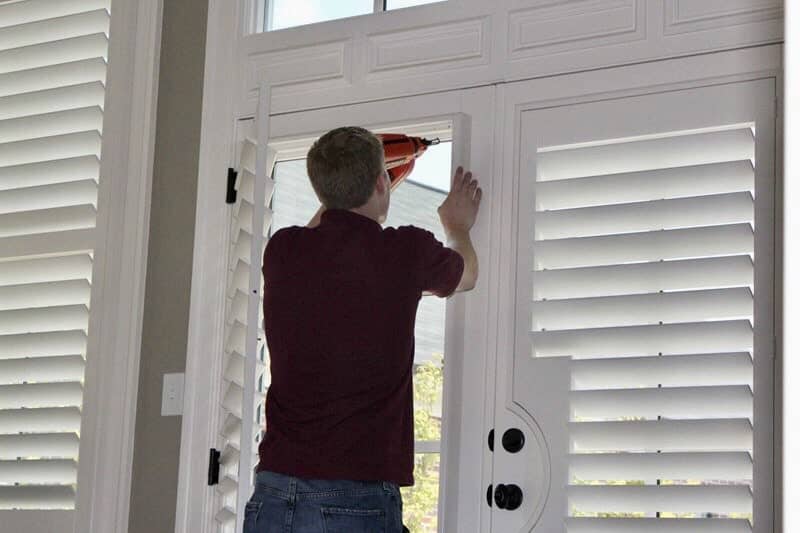
Sticking shutter louvers, loose screws, and squeaks can make a beautiful window treatment frustrating to use. Many minor plantation shutter repair issues need only a careful adjustment. Others need professional service before damage spreads.
For Jeffersonville homeowners, start with a gentle inspection instead of forcing the shutter. The right small fix can restore daily functionality and help extend the life of your shutters.
Plantation Shutter Problems Often Start Small
A plantation shutter has moving louvers, a tilt rod, hinge hardware, and panels that must stay aligned. Each louver is a horizontal slat that controls light and privacy. The tilt rod is the vertical piece that moves several louvers together.
Everyday use, dust, humidity, and normal wear and tear can affect these parts. A louver may stick. A hinge may squeak. A shutter panel may sag or fail to open or close evenly.
These are common issues, but they should not be ignored. Forcing a shutter can ruin a louver, loosen a screw, or cause damage to the louvers.
Definition: Louver tension is the resistance that helps each louver hold its position. Too much tension makes louvers hard to move. Too little tension makes them floppy.
First, Check What Is Actually Moving Wrong
Before any repair, assess the full shutter panel. Open the panel slowly and watch where it rubs, catches, or shifts. Use a clean cloth to remove dust from the rail, stiles, louvers, and casing.
The stiles are the vertical sides of the shutter panel. The rail is the horizontal piece at the top, center, or bottom. If the panel rubs the casing, the problem may be alignment rather than the louvers.
Do not pull hard on a tilt rod. Do not use a staple, nail, or adhesive to hold the louvers in place. Those shortcuts can make a later shutter repair more difficult.
How to Fix Sticking Shutter Louvers
Sticking shutter louvers often result from excess tension or dirt near the louver pin. A pin is the small pivot point that lets a louver rotate inside the stile.
Try a Gentle Cleaning First
Use a soft cloth or a vacuum attachment to clean each louver. Avoid harsh chemicals that could affect the finish on wood shutters, poly shutters, or composite shutters.
Then move the tilt rod gently. Watch whether one slat catches or whether several louvers resist movement. If one louver is stuck, do not twist it separately from the others.
These simple steps can help fix plantation shutter issues before a service visit is needed. Stop if the louver still catches after cleaning or resists normal movement.
Adjust the Tension Screw Carefully
Some plantation shutter designs use a tension screw at the side of the panel. A tension screw helps control how freely a louver moves.
- Locate the tension screw near the louver end or shutter stile.
- Use a Phillips head screwdriver that fits the screw securely.
- Turn the screw clockwise by a small amount if the louvers are loose.
- Turn the screw counterclockwise slightly to loosen a stuck louver.
- Rotate the tilt rod and test the louvers after each adjustment.
- Stop if the screw will not move or the louver still binds.
A small adjustment is usually enough. Over-tightening a screw can create more tension and cause a louver to stick again.
What to Do When Louvers Won’t Stay Open
When louvers won’t stay in place, they may have too much slack. This can make the shutter look floppy and reduce privacy or light control.
First, check whether the louvers become loose across the entire shutter or only in one area. If every louver drops, the tension screw may need a slight adjustment. If one louver will not hold, its pin or connection may need repair.
Do not try to reattach a broken louver with glue. A glued louver may not rotate evenly, and the repair can damage the shutter panel. We can assess whether a replacement louver or another repair is the better cost-effective solution.
How to Tighten a Loose Shutter Hinge
A shutter panel that sags may have loose screws at the hinge. This can happen after normal movement, settling, or repeated use. Heavier poly or vinyl shutter panels can also place more weight on hinge hardware.
Open the shutter panel fully. Check each hinge screw where the hinge meets the shutter stile and window casing.
- Hold the shutter panel level while checking the hinge.
- Tighten each loose screw with a Phillips screwdriver.
- Test the panel after tightening the screws.
- Check that the panel clears the casing when you open or close it.
- Stop if the screw spins without gripping.
A stripped hole may be filled with wood in some wood shutters, then fitted with the correct screw. However, this approach depends on the shutter material and the type of wood. Do not use this method on every shutter system without professional guidance.
If the panel still sags after you tighten the screw, the hinge may be bent, the casing may be out of alignment, or the shutter may need a replacement part.
How to Stop a Squeaky Shutter
A squeak usually comes from hinge movement or friction at a pin. Open and close the shutter slowly to identify the sound. Keep lubricant away from painted surfaces, louvers, and the tilt rod.
Use a dry lubricant that is appropriate for the hinge material. Apply only a small amount, then operate the shutter several times. Wipe away excess product immediately.
Avoid heavy oil products unless the shutter manufacturer recommends them. Oil can collect dust and leave residue near the hinge or louver.
If the squeak continues, the hinge pin may be worn. We can remove and replace the pin or hinge without risking the entire shutter.
When a Tilt Rod Needs Professional Repair
The tilt rod should move the louvers together. If the rod has come loose, do not force it back into place. The connection points can vary by shutter design.
Some shutters use small staples, hidden connectors, or spring-loaded parts behind the tilt rod. These parts hold the louvers together and are easy to damage with a pry tool.
A loose tilt rod may need to be reattached. A damaged tilt rod may need a replacement. If several louvers move separately, our team should inspect the shutter before you attempt a repair.
Can You Remove and Replace a Broken Louver?
Broken louvers need a closer inspection. The answer depends on the material, width, color, finish, and shutter construction.
At Window Decor, we offer shutters made of furniture-grade bass wood, waterproof poly, and high-density composite. Some shutters are made of wood, while others use waterproof poly or high-density composite. Material choice affects durability, weight, moisture resistance, and long-term maintenance.
Real wood shutters may be lighter and can be painted or stained. Poly wood shutters resist moisture, but they can weigh more and may contribute to panel sag.
A matching louver replacement is not always available. If a pin is worn, we may swap the affected part instead of replacing the entire shutter. In other cases, damage is extensive enough to replace the whole shutter panel.
Read our comparison of real wood plantation shutters and poly wood shutters before choosing a material for a repair or new installation.
When DIY Shutter Repair Is Appropriate
A homeowner can often handle light cleaning, minor tension adjustment, and clearly loose screws. These steps are low-risk when the shutter is stable and the parts are intact.
Call for service when you find broken louvers, a cracked stile, a bent hinge, a damaged tilt rod, missing pins, or a panel that will not align. You also need expert help if the shutter is under warranty or the repair requires specialty parts.
Do not remove a shutter panel if you are unsure how it connects to the frame. A panel can be heavy, especially when it covers a wide window or door.
Expert Guidance for Jeffersonville Shutter Repairs
Window Decor has served homeowners with custom window coverings for more than 30 years. We handle the full process, from consultation and measurement to design, manufacturing, installation, and warranty work.
Our Jeffersonville team can quickly assess whether a minor adjustment, replacement part, or new shutter panel is appropriate. We offer free consultations and estimates for homeowners in Jeffersonville and nearby communities.
For more information about custom materials, louver sizes, and hidden tilt options, visit our plantation shutters page. You can also explore the Window Decor homepage for other window treatment options.
A Simple Plan for Shutters That Work Smoothly
Start by cleaning the shutter and identifying the exact problem. Make only small, measured adjustments to a tension screw or loose hinge screw. Test the shutter after every change.
Stop when the repair involves a broken louver, damaged tilt rod, stripped hardware, or a misaligned panel. That decision protects your investment and helps ensure your shutters look and operate like they should.
Quick Answers About Plantation Shutter Repair
How much does plantation shutter repair cost?
Repair cost depends on the damaged part, shutter material, panel width, labor, and whether a matching replacement is available. We can inspect the issue and provide a free estimate before recommending work.
Why are my shutter louvers sticking?
Sticking louvers may have excess tension, dust around a pin, or damage near the shutter stile. Clean first, then make a very small tension screw adjustment if your shutter design allows it.
Why does my shutter panel sag?
A sagging shutter panel may have loose screws, a worn hinge, or weight-related alignment issues. Tighten accessible screws first, then call our team if the panel still rubs the casing.
Can I fix a loose tilt rod myself?
You should avoid repairing a loose tilt rod unless you know how your shutter connects. Hidden staples or spring-loaded parts can be damaged easily, so professional service is often safer.
Is shutter repair covered by a warranty?
Warranty coverage depends on the product and the cause of the damage. Window Decor offers lifetime warranties on nearly all products and handles warranty issues. Contact us to review your specific shutter and purchase details.
Get Help With Your Plantation Shutters
If your shutter repair needs more than cleaning or a minor screw adjustment, Window Decor can help. Our Jeffersonville team can inspect the problem, explain your options clearly, and recommend the next step.
Call Window Decor or schedule a free consultation through our contact page.
Key Takeaways
- Clean each shutter, louver, rail, and stile before attempting a repair.
- Make small tension screw adjustments, then test the louvers.
- Tighten loose screws only when the shutter panel is supported and level.
- Use the right screwdriver to avoid stripping a screw head.
- Do not force a stuck louver or pull hard on a tilt rod.
- Replace damaged parts only when the material and shutter system support it.
- Call our team for broken louvers, sagging panels, hinge damage, or hidden hardware issues.
- Review warranty coverage before paying for plantation shutter repair.
