
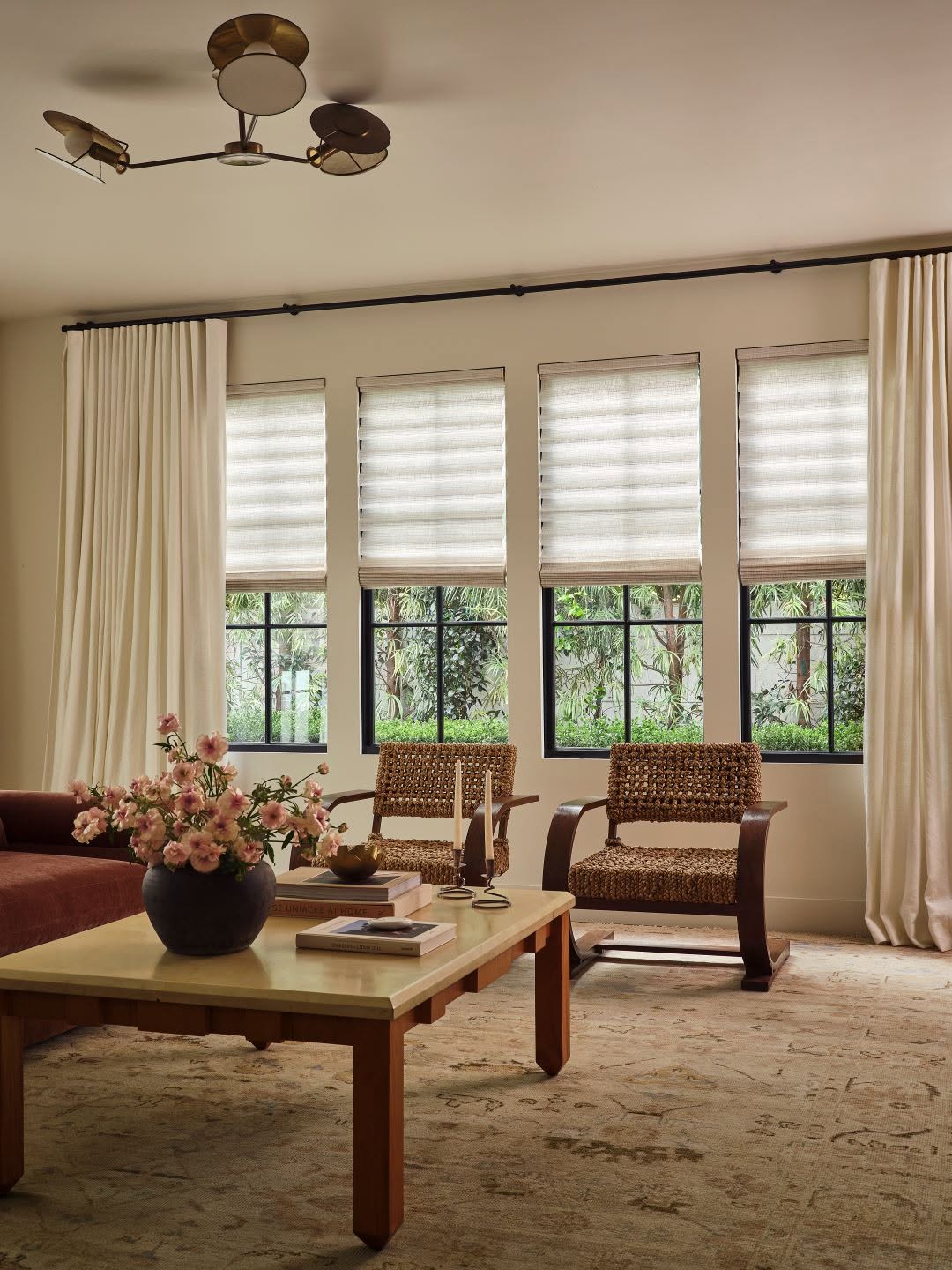
To measure windows for blinds, take three width readings and three height readings, and note the narrowest and longest numbers. Pick your mount style, then check how deep the frame is. A quarter inch can decide whether a custom order fits, so double-check your numbers before you buy.
Measuring Windows in Georgetown, IN: A Step-by-Step Guide for Homeowners
If you own a home in Georgetown, IN, you want to measure your windows once and get it right. Older homes and newer builds both have windows that are not perfectly square. Houses settle, and a frame can shift over the years.
This guide to measure width, height, and depth is written for homeowners. You will find out how to measure for custom window treatments, and when to call a pro. WindowDecor serves Georgetown, IN, and we have measured homes across Southern Indiana and Louisville since 1993.
Why One Wrong Measurement Ruins a Custom Blind Order
Many homeowners measure once, place an order, and wait. Then the blind arrives a quarter inch too wide, or the shade will not sit flat.
Custom products are cut to order, so they usually cannot be returned like store-bought window blinds. That is frustrating, and it costs you time and money. The good news is that most mistakes come from a few small habits.
Here are the mistakes we see most often:
- Measuring the glass instead of the window opening.
- Measuring the width only once.
- Skipping the depth of the frame.
- Missing an obstruction, such as a crank or a handle.
Inside Mount vs. Outside Mount: Which One Fits Your Window?
Choosing inside or outside mount is the first decision you make. An inside mount means the blinds sit inside the window opening, within the window frame. An outside mount means you hang outside the window frame, on the wall or trim.
Inside gives a clean, built-in look. Outside gives you more freedom.
When Mounting Inside Works Best
- The frame is deep enough for the product.
- The frame is square and in good shape.
- You want to show off the trim and other beautiful architectural features.
When Mounting Outside Works Best
- The frame is too shallow for the product.
- You want to cover more of the wall or trim.
- You want more privacy and light control around the edges.
- Something blocks the space inside.
If you are unsure, mounting outside is often more forgiving. It hides small flaws in the frame.
What You Need Before You Measure
Grab a steel tape measure, a pencil, paper, and a small ladder. Cloth tapes can stretch and give you a false number. Write every number in inches, to the nearest eighth of an inch.
Measure each window on its own. Two windows that look alike are often different sizes.
Numbered Steps to Measure for Blinds Like a Pro
Follow these seven steps to measure blinds and ensure a perfect fit.
- Step 1: Check the window opening. Look at the front of the window and the side of the window for anything in the way. Handles and locks can stop a blind from hanging flat.
- Step 2: Measure the width at three points. Measure across the top of the window, the middle, and the bottom. That is how you measure in three places.
- Step 3: Choose your width. You now have three measurements. For an inside mount, use the narrowest measurement. That helps the blind slide in without sticking.
- Step 4: Measure the height. Measure from top to bottom on the left, center, and right sides.
- Step 5: Choose your height. For inside mount blinds, use the longest measurement so the blind reaches the window sill. For outside, see the next section.
- Step 6: Measure the depth. Measure from the face of the frame to the glass. This tells you whether mounting inside works.
- Step 7: Label and double-check your measurements. Write the room and window, such as “kitchen, left.” Then check each number again.
How to measure for an outside mount
Measure the area you want to cover, not the opening. Decide where you want the blind to end, then add overlap so light cannot leak around the edges.
A common starting point is to add at least 3 inches to the width. That gives about 1.5 extra inches on each side. Your final measurements should include this overlap.
Why you should never round your numbers
Give exact numbers. A blind fits only when the numbers are right, and exact numbers ensure the blinds fit. Rounding up can make a blind too wide, and rounding down can leave a gap.
Always confirm the blind you order matches what you wrote down.
Measuring for Shades: Roller Shades, Cellular Shades, and Roman Shades
Roller styles, sometimes called roller blinds, roll up on a tube. A cellular shade, also called a honeycomb shade, traps air in small pockets to help with insulation.
Each style needs a different amount of depth, depending on the blind or shade you pick. Each product has a space it needs to fit. The headrail is the box at the top that holds the working parts, and headrails differ by brand.
Faux wood blinds can also need more room than thin shades. Check the spec sheet for the depth your choice requires.
We make blinds and shades in many styles. Browse our Blinds & Shades page to compare them, or read how to choose between Roman and roller styles.
Measuring for Plantation Shutters: Why Depth Matters More
Shutter depth is the space a panel needs to sit and swing open. Plantation shutters have a frame and louvered panels, so they need more room than most blinds.
Check two things. First, measure the depth of the frame. Second, make sure the panels can open without hitting a handle or lock.
If the frame is too shallow, a different style may still work. That is a good time to ask a professional. See our Plantation Shutters page for materials and styles.
Measuring Bay Windows, Vertical Blinds, and Door Blinds
Some windows are harder to measure. A standard window has four straight sides. Bay windows, angled windows, and doors do not.
Bay windows
Bay windows consist of several sections that meet at an angle. A bay often needs three blinds, one for each section. Measure each section on its own, and note each angle.
Blinds in a bay need extra care, because an angle that is off can leave gaps. Windows can sometimes sit close together, so check clearance too. This is a smart time to call a professional.
Vertical blinds and door blinds
Vertical blinds are a common choice for sliding glass doors. Door blinds also include options for French doors and sidelights. WindowDecor started as a maker of vertical and faux wood blinds, so these are familiar to us.
Measure the width and height of the opening or wall space. Leave room for the door handle so the blinds move smoothly.
Why a Quarter Inch Decides Whether Your Blinds Fit
Mounting inside needs a small gap so the blind can move. A deduction is a small amount the maker subtracts from your width to create that gap.
Some makers apply the deduction for you, and others expect exact numbers. Ask your supplier which one they use, so you know the blinds will fit. Get this right, and the blinds fit perfectly.
If the blind is wider than the opening, it will not go in. If it is narrower than needed, light will show at the sides.
What We See in the Field
Our team measures windows in homes across Southern Indiana and Louisville every week. A few patterns come up again and again.
- Windows that look square often are not. The three-point check catches this.
- Homeowners often measure the glass, not the frame.
- Depth is the step people skip most. It decides whether mounting inside works.
Because we make and install our products, we see how small errors affect blinds installed in a home. That is why we suggest professional measuring for unusual windows.
When to Measure Yourself and When to Call a Pro
Measuring yourself works for simple, square windows with standard blinds. It is also a smart way to sanity-check a quote.
Call a professional if you notice any of these:
- The frame is out of square.
- You are ordering plantation shutters.
- The window is arched, angled, or a bay.
- The product is motorized.
- You are covering a wide sliding door.
A pro can measure accurately and avoid costly mistakes. Pricing depends on size, style, material, and options, so exact numbers also help you compare quotes fairly.
Measure Twice and Order Once for a Fit You Can Trust
Take three readings for width and three for height, pick your mount, and check the depth. Choose the narrowest width and longest height when mounting inside, then write everything down.
If any number feels close, get a second opinion before you order. You do not have to figure it out alone.
Quick Answers
How do I measure for blinds?
Take three width readings and three height readings. When mounting inside, pick the narrowest width and the longest height. For outside, measure the space to cover and add extra width.
What is the difference between inside and outside mounts?
An inside mount fits within the frame. An outside mount attaches to the wall or trim around the window.
How deep does a window frame need to be?
It depends on the product. Plantation panels usually need more depth than shades, so check the spec sheet.
Should I round my measurements?
No. Give exact numbers to the nearest eighth of an inch. Let the maker handle any adjustment.
Get Your Windows Measured the Right Way
Want to skip the guesswork? WindowDecor offers a free consultation, and we handle the measuring, design, and installation. Read what to expect in our consultation FAQ post, or call us at (502) 713-3535.
You can also visit the WindowDecor homepage or find us on our Google Business Profile.
Key Takeaways
- Take three readings for width and three for height on every window.
- Pair the narrowest width with the longest height when mounting inside.
- Choose an outside mount if the frame is shallow or out of square.
- Check frame depth before you choose a product.
- Look for handles or locks that could get in the way.
- Add extra width for an outside mount.
- Give exact numbers and never round.
- Call a professional for bay windows, odd shapes, and any close call.
